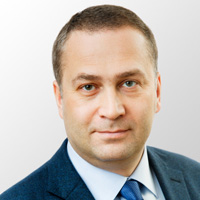
On 5 June 2026, the St. Petersburg International Economic Forum hosted the session “Arbitration as a Magnet for Capital: Competition between Jurisdictions for Commercial Disputes”. Dimitry Afanasiev, Co-Founder, EPAM Law, took part in the discussion and proposed measures to make Russia a more attractive venue for dispute resolution and to strengthen protection for Russian companies in disputes.
Afanasiev’s proposals focused on three areas: improving the rules on evidence, giving Russian courts broader powers in disputes involving foreign defendants, and building a stronger record of enforcing Russian court judgments in partner jurisdictions.
The session was opened by Vladimir Gruzdev, Chairman of the Board, Association of Lawyers of Russia. He noted that a strong dispute resolution system is now a real competitive advantage for any country.
Boris Boltyanskiy, Editor-in-Chief, Pravo.ru, then presented a study of the arbitration disputes market involving Russian parties. According to the study, the five leading international arbitration centres hear disputes worth around USD 250 billion each year. Since 2014, Russian companies have increasingly turned to Russian and Asian arbitration centres, a shift driven by sanctions restrictions and declining confidence in Western institutions.
Dimitry Afanasiev developed this theme by focusing on what Russia needs to do to strengthen its own position as a dispute resolution venue. He noted the significant work done by the Russian Ministry of Justice in recent years to make Russia more attractive for dispute resolution. This includes the reform of arbitral proceedings and draft legislation that would allow state courts to issue writs of execution for interim measures ordered by arbitral tribunals.
At the same time, Dimitry Afanasiev said that several procedural issues still need to be addressed. One of the main issues, in his view, is evidence. He proposed introducing a discovery procedure - a mechanism used in the Anglo-American legal system for collecting and disclosing evidence. Such a mechanism, he said, could improve the quality of Russian court judgments and make them easier to enforce abroad.
Dimitry Afanasiev also noted that many Russian companies can no longer protect their rights effectively in foreign jurisdictions because of existing restrictions. In this situation, he said, Russian courts should be able to consider a broader range of claims involving foreign defendants, including damages claims and claims in tort. It is also important to ensure that Russian court judgments can later be enforced in partner jurisdictions, including countries of the Global South. As an example, Dimitry Afanasiev referred to Brazil, where, according to him, 100% of Russian court judgments had been enforced over the past century.
Elena Borisenko, Deputy Chairman of the Management Board, Gazprombank, said that the world had “proved to be far broader” than it had appeared ten years ago. Arbitration is developing rapidly in the countries of the Global South and in China, while the BRICS countries are increasingly shaping new dispute resolution centres.
According to Borisenko, capital goes where business opportunity is backed by legal protection. In this context, she said that, thanks to the reforms being carried out in Russia, investors can expect disputes to be heard properly, transparently and fairly.
Borisenko also addressed trust in international arbitration under sanctions. She noted that, after leading institutions began restricting access to justice on the basis of extra-legal sanctions measures, businesses became more cautious about disclosing information and more concerned about confidentiality. She said Russia has an opportunity to improve its procedural rules, including the rules on evidence, and to strengthen confidentiality protections. If this is done, Russia could become a preferred venue for commercial disputes.
Alexey Khersontsev, State Secretary – Deputy Minister of Economic Development of the Russian Federation, said that dispute resolution infrastructure is as important for the investment climate as the tax rate or the speed of customs clearance. He noted that this is why the national target model for business conditions includes a separate section on dispute resolution, with 31 measures and five indicators. Khersontsev named faster enforcement of judgments, the development of arbitration and mediation, and adjudication mechanisms for major industrial projects as key priorities.
Victoria Burkovskaya, Member of the Presidium, Association of Lawyers of Russia, focused on how sanctions pressure affects the protection of Russian assets abroad. She also spoke about the emergence of parallel legal regimes in Russia and Western jurisdictions. Particular attention, she said, should be paid to whether court judgments can be enforced in practice.
Ivan Zykin, Deputy Chairman, International Commercial Arbitration Court at the Chamber of Commerce and Industry of the Russian Federation, noted the growing role of Russian arbitral institutions as access to a number of foreign arbitration bodies remains restricted. He said the ICAC remains one of the most popular arbitration institutions for disputes involving Russian parties. In 2025, it heard 337 international cases. Zykin cited highly qualified arbitrators, efficient proceedings and relatively low arbitration costs as the ICAC’s main advantages.
Tatyana Sizova, Commissioner for Entrepreneurs' Rights Protection in Moscow, spoke from the business perspective. She said businesses expect arbitration to be predictable and fast, and its decisions to be enforceable. Among practical steps, she mentioned faster procedures and clearer guidance on the simplified procedure for hearing cases. She also supported the Ministry of Justice’s proposal to recognise final arbitral awards as enforceable instruments.
Summing up the discussion, Konstantin Chuychenko, Minister of Justice of the Russian Federation, spoke about ongoing efforts to create a BRICS arbitration mechanism for commercial disputes. He noted that mutual recognition of decisions was now a realistic prospect. In closing, the Minister said that arbitration faces a number of complex challenges. He stressed that an effective system cannot be developed without addressing many of the issues and proposals raised during the session, including by Dimitry Afanasiev, and invited the participants to continue the discussion at the 14th St. Petersburg International Legal Forum at the end of June.